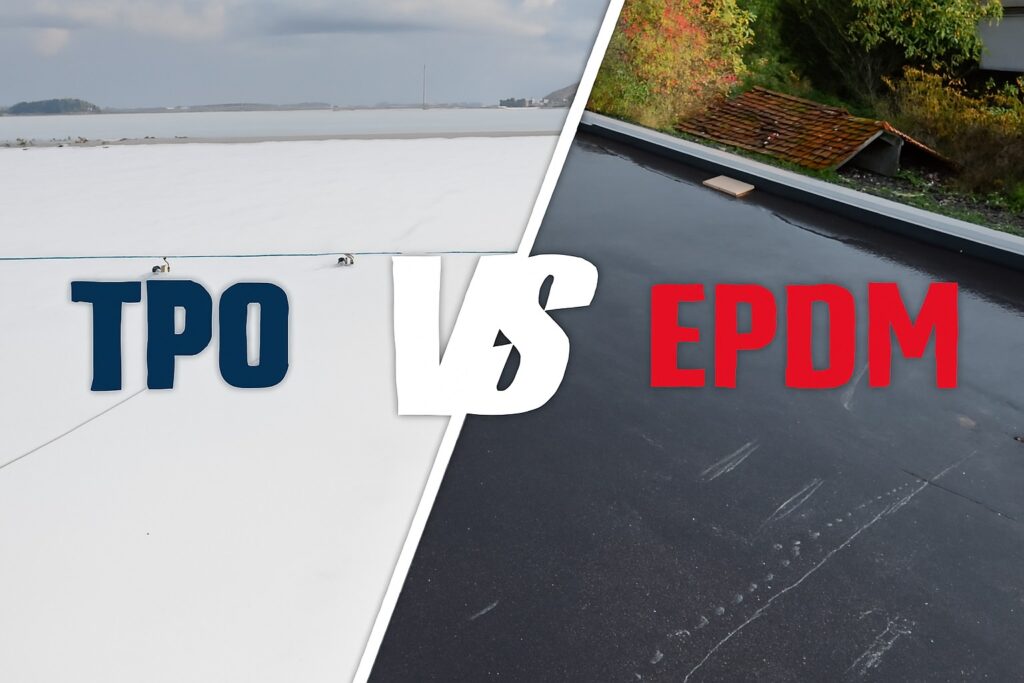
Selecting the right commercial roofing materials for your property represents one of the most important investment decisions you’ll make as a building owner or facility manager in San Antonio. At SoTex Roofing and Exteriors, we understand that the choice between different commercial roofing materials can significantly impact your building’s performance, energy efficiency, and long-term operational costs. While our expertise primarily serves commercial clients, many homeowners with flat-roofed residences, modern architectural designs, guest houses, or investment properties can benefit from understanding the characteristics and performance differences between major commercial roofing materials.
Insight TPO Membrane Technology
Thermoplastic Polyolefin (TPO) has emerged as one of the fastest-growing segments in commercial roofing materials, combining advanced polymer technology with practical installation benefits that appeal to property owners seeking reliable, cost-effective solutions. TPO commercial roofing materials consist of a single-ply membrane that’s typically white or light-colored, providing excellent solar reflectance that can significantly reduce cooling costs in San Antonio’s hot climate. The heat-welded seam technology used with TPO creates incredibly strong joints that often exceed the strength of the membrane itself, providing superior wind resistance and weather protection compared to adhesive-bonded systems.
The chemical composition of TPO commercial roofing materials provides excellent resistance to UV radiation, ozone exposure, and chemical contamination that can compromise other membrane types. Modern TPO formulations incorporate advanced stabilizers and reinforcement materials that enhance puncture resistance and dimensional stability, addressing some of the early performance issues that affected first-generation TPO products. The flexibility and workability of TPO commercial roofing materials make them suitable for complex roof geometries and details, while their relatively lightweight construction minimizes structural loading concerns that might limit material choices on some buildings.
EPDM Rubber Roofing Characteristics
EPDM (Ethylene Propylene Diene Monomer) rubber represents one of the most proven and reliable commercial roofing materials available, with a performance track record spanning over four decades of successful installations worldwide. This synthetic rubber membrane offers exceptional durability and weather resistance, maintaining its flexibility and protective properties across extreme temperature ranges that would compromise many other materials. EPDM commercial roofing materials are available in both black and white formulations, with white EPDM providing reflective benefits similar to TPO while black EPDM offers superior heat absorption for applications where thermal gain might be beneficial.
The molecular structure of EPDM commercial roofing materials provides natural resistance to ozone, UV radiation, and weathering that allows these systems to maintain their protective properties for 20 to 30 years or more with proper installation and maintenance. EPDM membranes are typically installed using mechanical attachment, fully adhered, or ballasted systems, providing flexibility to accommodate different structural conditions and performance requirements. The proven longevity and consistent performance of EPDM commercial roofing materials have made them a preferred choice for many institutional and government facilities where long-term reliability is paramount.
Performance Comparison in San Antonio Climate
The unique climate conditions in San Antonio create specific performance demands that influence the selection between different commercial roofing materials. TPO’s reflective properties provide significant advantages during the extended cooling season, with light-colored membranes reflecting up to 80% of solar radiation and helping reduce roof surface temperatures by 50 degrees or more compared to darker materials. This thermal performance can translate to substantial energy savings and improved indoor comfort, particularly for buildings with minimal roof insulation or high internal heat loads.
EPDM commercial roofing materials offer different performance characteristics that may be advantageous in specific applications or building types. Black EPDM can provide beneficial thermal mass effects during winter months, while white EPDM delivers reflective performance comparable to TPO. The exceptional flexibility of EPDM allows it to accommodate thermal movement and settling that might stress other commercial roofing materials, making it particularly suitable for buildings with structural movement or complex expansion joint requirements. Both materials provide excellent resistance to the sudden temperature changes and severe weather events common in Texas, though their specific performance characteristics may favor one material over another depending on individual building requirements.
Installation and Maintenance Considerations
The installation requirements for different commercial roofing materials can significantly impact project costs, scheduling, and long-term performance outcomes. TPO systems utilize heat-welded seams that create permanent, weather-resistant joints, but require specialized equipment and skilled technicians to achieve proper seam strength and integrity. Weather conditions during installation can affect TPO welding operations, potentially extending project timelines during periods of high humidity or temperature extremes. However, the speed of TPO installation and the strength of heat-welded seams often provide advantages that offset these considerations.
EPDM commercial roofing materials typically offer more forgiving installation requirements, with splice adhesives that can be applied across a wider range of temperature and humidity conditions. The flexibility of EPDM makes it easier to work around roof penetrations and complex details, while the availability of both adhered and mechanically attached systems provides options for different structural conditions and performance requirements. Maintenance requirements for both commercial roofing materials are relatively minimal, though EPDM systems may require periodic inspection and maintenance of splice areas, while TPO systems benefit from regular cleaning to maintain their reflective properties.
Cost Analysis and Long-Term Value
The economic comparison between different commercial roofing materials extends beyond initial material and installation costs to include energy performance, maintenance requirements, and expected service life. TPO commercial roofing materials typically offer competitive initial costs while providing ongoing energy savings through their reflective properties, making them attractive for buildings with high cooling loads or limited insulation. The strong seam technology and puncture resistance of modern TPO can also reduce maintenance costs and extend service life compared to earlier formulations.
EPDM commercial roofing materials often provide superior long-term value through their proven durability and minimal maintenance requirements, even though initial costs may be slightly higher than some alternatives. The extended service life typical of EPDM systems, combined with their ability to be restored and recoated, can provide excellent lifecycle cost performance for property owners planning long-term ownership. Insurance benefits may also favor proven commercial roofing materials like EPDM, particularly for properties in areas prone to severe weather or hail damage.
Making the Right Material Choice
Selecting between TPO and EPDM commercial roofing materials requires careful consideration of building-specific factors, performance priorities, and long-term property goals. At SoTex Roofing and Exteriors, we provide comprehensive consultations that evaluate your building’s structural conditions, energy requirements, and operational needs to recommend the most appropriate commercial roofing materials for your situation. Our experience with San Antonio’s climate challenges and extensive knowledge of both material types ensures that your selection will provide optimal performance and value.
The decision between commercial roofing materials should also consider future building plans, sustainability goals, and potential for roof-mounted equipment or solar installations. Both TPO and EPDM offer excellent platforms for these applications, though specific material characteristics may favor one option over another depending on your particular requirements and objectives.