
Emergency roof repair San Antonio is a service most Bexar County homeowners never think about until they are standing in their living room during a thunderstorm, watching water drip through the ceiling. San Antonio’s severe weather profile, combining intense hail events, high winds, flash flooding, and occasional tropical moisture from Gulf systems, means that roof emergencies are not rare occurrences in this market.
They are a predictable reality for any homeowner who has not maintained their roof proactively or who simply finds themselves in the path of a storm strong enough to damage even a well-maintained system. Knowing who to call, what to do in the first hour, what emergency repairs actually involve, and how to protect your insurance claim from the moment damage occurs can save thousands of dollars and weeks of recovery time. This guide covers everything you need to know.
What is Emergency Roof Repair San Antonio?
Emergency roof repair San Antonio is an urgent, same-day or next-day roofing service that stabilizes a damaged roof to stop active water intrusion, prevent further structural damage, and secure the property until a permanent repair or full replacement can be completed. Emergency repairs are not permanent solutions. They are protective interventions designed to bridge the gap between the moment damage occurs and the scheduled completion of a full professional repair.
In San Antonio, emergency roof repair is most commonly triggered by hail impact damage, wind-driven shingle blow-off, tree or branch impact, and storm-related flashing failures that expose the roof deck to immediate water entry. Response time from a qualified San Antonio contractor typically ranges from same-day to within 24 hours, depending on the volume of storm damage across the metro area following a major weather event.
Emergency Roof Repair Scenarios and Response Priority
| Damage Scenario | Water Intrusion Risk | Emergency Action Required | Response Priority |
|---|---|---|---|
| Active interior leak during storm | Immediate | Temporary tarping of affected area | Call within the hour |
| Multiple shingles blown off (full exposure) | Very High | Emergency tarping and debris removal | Same day |
| Tree or branch impact on roof deck | Very High | Debris removal and structural tarping | Same day |
| Flashing failure at chimney or vent | High | Temporary sealant or flashing patch | Within 24 hours |
| Single shingle blow-off with underlayment intact | Moderate | Temporary patch or replacement shingle | Within 48 hours |
| Hail damage without active leak | Low to Moderate | Professional inspection and documentation | Within 2 weeks |
Distinguishing between a true emergency requiring same-day response and damage that can safely wait for a scheduled repair prevents unnecessary emergency pricing charges on work that is not genuinely urgent.
Why Emergency Roof Repair in San Antonio Matters (The Real Cost Breakdown)
The Cost of Delayed Emergency Response
| Delay Scenario | Additional Damage Cost | Preventable With |
|---|---|---|
| Waiting 48 hours with exposed deck | $2,000 to $6,000 in deck and insulation damage | Same-day tarping ($200 to $500) |
| No tarp during second rain event | $4,000 to $15,000 in interior water damage | Emergency tarp installed after first event |
| Tree debris left on damaged roof | $1,500 to $5,000 in additional deck compression | Same-day debris removal |
| Delayed interior drying after leak | $3,000 to $10,000 in mold remediation | Immediate moisture mitigation |
| Missed claim documentation window | $8,000 to $20,000 unpaid claim | Photos and report within 24 hours of damage |
Every hour between roof damage and emergency stabilization is an hour that water, debris, weight, and structural exposure are working against the homeowner. The cost of a professional emergency tarp installation in San Antonio, typically $200 to $500, is the most reliable investment available in the immediate aftermath of storm damage.
The San Antonio Storm Reality
San Antonio averages more than 40 severe weather events annually. The city sits at the convergence of Gulf moisture, dry western air, and strong atmospheric lift that produces some of the most intense localized hail and wind events in Texas.
In the spring hail season alone, Bexar County regularly records multiple events with hail sizes exceeding one inch in diameter, which is the threshold at which asphalt shingles begin experiencing measurable impact damage. Homeowners in San Antonio are not managing a rare risk. They are managing a recurring one.
Types of Emergency Roof Repairs in San Antonio: Know Your Options
Different damage types call for different emergency repair approaches, and understanding what each involves helps homeowners evaluate contractor proposals and confirm that the recommended work matches the actual damage. Emergency tarping is the most common and most broadly applicable emergency repair in San Antonio.
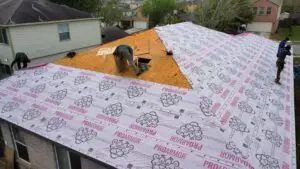
A heavy-duty polyethylene or reinforced poly tarp is secured over the damaged area using wood battens, screws, and sandbags to create a temporary waterproof barrier that protects the deck and interior until permanent repairs are completed. A properly installed emergency tarp should extend at least 4 feet beyond the damaged area on all sides and be secured well enough to withstand the wind speeds typical of subsequent San Antonio storm events.
Emergency shingle patching involves replacing or temporarily securing individual blown-off or cracked shingles using roofing cement, self-adhered flashing tape, or replacement shingles to restore surface coverage over an exposed area. This approach works well for limited damage involving fewer than five to ten shingles and provides a more aesthetically acceptable temporary fix than a full tarp when the damaged area is small.
Emergency flashing repair addresses immediate water entry at chimney, vent, or valley flashing failures using temporary sealant, flashing tape, or cut sheet metal to close the gap until a permanent flashing system can be installed. Temporary flashing repairs are effective for 30 to 90 days, depending on the material used and the weather conditions they face.
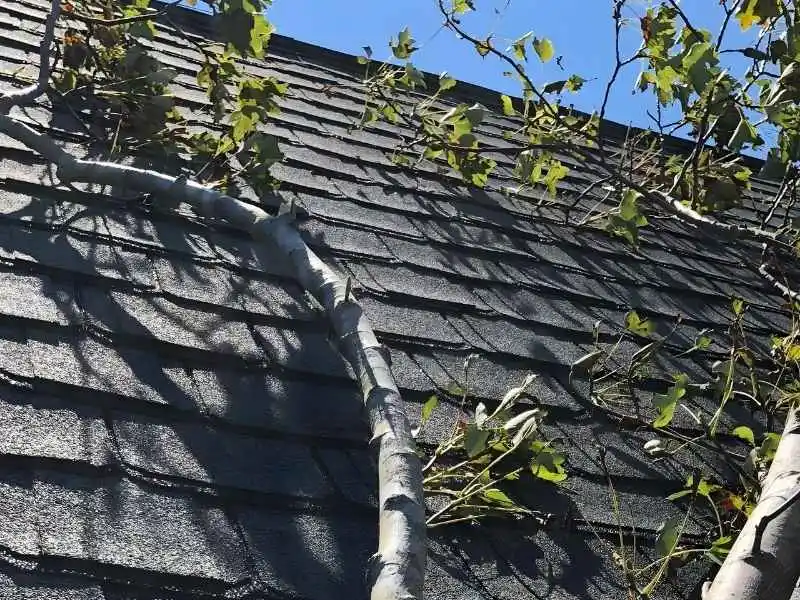
Emergency tree and debris removal involves safely extracting fallen branches or tree sections from the roof surface, assessing the structural damage beneath, and tarping the exposed area before any additional rain event. Debris removal on a damaged roof requires careful sequencing to avoid worsening the structural damage during extraction, and in most cases a licensed contractor should perform this work rather than the homeowner.
Structural bracing is required when an impact has damaged or displaced roof framing members, including rafters or trusses. This is the most complex and expensive emergency repair type and typically requires an engineer’s assessment before permanent repair work can begin.
What to Do in the First Hour After Emergency Roof Damage in San Antonio
Acting correctly in the first hour after storm damage significantly improves both the physical and financial outcome of an emergency roof repair San Antonio.
Step 1: Ensure the safety of everyone in the home first. If the roof structure has been compromised by a tree impact or if there is any sign of electrical hazard from downed lines near the home, evacuate immediately and call emergency services before contacting a roofing contractor.
Step 2: Stop interior water damage immediately. Place buckets, towels, and plastic sheeting to catch and redirect any active dripping and move furniture, electronics, and valuables away from the affected area. Cover flooring and belongings with plastic tarps to limit moisture contact damage.
Step 3: Document everything with photos and video before any cleanup. Take date-stamped photos and video of the exterior damage, the interior damage, and any personal property affected. This documentation is the foundation of your insurance claim and must be completed before any cleanup or repair work begins.
Step 4: Contact your insurance company to report the damage. Call your insurer’s claims line to report the event and open a claim as soon as possible. Provide the approximate date and time of the storm, a description of the damage, and confirm the claim number and adjuster assignment process before ending the call.
Step 5: Call a licensed San Antonio roofing contractor for emergency stabilization. Request same-day or next-day emergency tarping to stop further water entry before the next rain event. Confirm that the contractor is licensed with the Texas Department of Licensing and Regulation before authorizing any work.
Step 6: Do not sign any contract or Assignment of Benefits document at this stage. Emergency authorization to install a protective tarp does not require signing a full repair contract. Separate the emergency stabilization from the permanent repair decision and take the time to obtain multiple quotes for the permanent work before committing.
San Antonio Emergency Repair Response Timeline
| Timeframe | Action Required | Who Is Responsible |
|---|---|---|
| First 30 minutes | Interior protection, photos, and insurance call | Homeowner |
| Within 2 to 4 hours | Emergency contractor call, tarp authorization | Homeowner |
| Same day to 24 hours | Emergency tarp or patch installation | Licensed contractor |
| Within 48 to 72 hours | Insurance adjuster inspection | Insurance company |
| Within 1 to 2 weeks | Permanent repair estimate and scheduling | Licensed contractor |
| Within 30 days | Permanent repair completion | Licensed contractor |
Common Emergency Roof Repair Mistakes San Antonio Homeowners Make
Hiring the first contractor who knocks on the door after a San Antonio storm is the most common and most costly emergency repair mistake made by local homeowners. Storm chaser contractors from out of state flood the San Antonio market within hours of a major weather event, frequently offering to start work immediately, waive deductibles, or handle all insurance paperwork on the homeowner’s behalf.
These offers are pressure tactics, not services. Verifying a contractor’s Texas license before authorizing any work, including emergency tarping, takes five minutes and eliminates the risk of hiring an unqualified operator who disappears after collecting a payment.
Performing DIY emergency roof repair san antonio unsafe conditions is a risk that costs San Antonio homeowners serious injuries every storm season. A wet roof surface following a hail or rain event is one of the most dangerous working surfaces a homeowner can encounter, and attempting to secure a tarp, nail down lifted shingles, or remove debris from a storm-damaged roof without professional fall protection equipment and roofing experience is not a cost-saving measure.
It is an unnecessary risk to life. Waiting for the insurance adjuster to inspect before installing emergency protection leaves the roof exposed during the adjuster scheduling window, which, in a major San Antonio storm event, can be several days to two weeks. Insurance companies expect homeowners to take reasonable steps to prevent further damage after a loss. Emergency tarping is a covered mitigation expense under most policies and should be completed before the adjuster’s visit, not after.
Failing to photograph the damage before cleanup or emergency repair work begins eliminates the most important documentation in the entire claim process. An insurance adjuster who inspects a roof that has already been tarped without pre-tarp photos has no independent record of the original damage scope and may apply a narrower damage assessment than the actual loss warrants.
Accepting an emergency repair contractor as the automatic choice for the permanent repair work removes the competitive bidding process that protects San Antonio homeowners from inflated pricing during high-demand post-storm periods. Emergency stabilization and permanent repair are two separate decisions, and a homeowner who separates them consistently achieves better pricing and better workmanship outcomes.
San Antonio Emergency Roof Repair Benchmarks by Roof Age
Roof age is one of the strongest predictors of emergency repair frequency and complexity in San Antonio’s severe weather environment. Roofs 0 to 5 years old that require emergency repair after a San Antonio storm are most likely experiencing installation defects or damage from an unusually severe event.
Improperly fastened shingles, missing drip edge, and inadequate flashing at penetrations are common installation issues that a moderate storm can convert into emergency conditions on a new roof. These situations may involve contractor warranty claims in addition to insurance claims.
Between 5 and 10 years, San Antonio roofs begin to accumulate the effects of UV degradation and thermal cycling on sealant strips and flashing sealants. When homeowners require emergency roof repair San Antonio within this age range, the issues most commonly involve flashing failures and localized shingle blow-off at areas where sealant strip adhesion has weakened ahead of the rest of the roof.
At 10 to 15 years, the frequency of these urgent repairs increases meaningfully as cumulative storm history, granule loss, and shingle brittleness from heat exposure combine to reduce the roof’s ability to resist impact and wind loading. Roofs in this age range that sustain emergency-level damage should receive a full professional assessment to determine whether the surrounding field is close enough to failure to justify a full replacement rather than a localized repair.
Between 15 and 20 years, emergency repairs on San Antonio roofs of this age frequently reveal that the damage triggering the emergency call is simply the most visible manifestation of widespread deterioration across the full roof system. A contractor performing emergency tarping on a 17-year-old San Antonio roof will typically recommend a full replacement assessment alongside the stabilization work, and that recommendation is almost always financially justified.
Over the past 20 years, any San Antonio roof sustaining emergency-level storm damage should be evaluated for full replacement as the primary response rather than emergency repair followed by patchwork. The cost of repeated emergency interventions on a roof past its service life in a high-storm market like San Antonio consistently exceeds the cost of timely replacement.
Technology Tools San Antonio Homeowners Can Use
Modern tools give San Antonio homeowners faster, better-documented responses to roof emergencies than were possible a decade ago. Weather alert apps with hyperlocal radar tracking allow homeowners to monitor storm cells approaching specific San Antonio zip codes in real time, providing enough lead time to move valuables, check attic access, and have contractor contact information ready before a storm arrives. Hail verification services confirm whether a qualifying hail event occurred at a specific San Antonio address within hours of a storm, providing storm date, hail size, and path data that support an insurance claim opened the same day.
Drone inspection services available from several San Antonio roofing contractors can document roof damage with high-resolution aerial imagery within 24 hours of a storm event, producing a timestamped visual record of the damage condition before any repair work begins that is difficult for an insurance adjuster to challenge.
The Texas Department of Licensing and Regulation online contractor lookup tool allows homeowners to verify any San Antonio roofing contractor’s license status, insurance coverage, and disciplinary history in under two minutes from a smartphone, which is fast enough to complete the check before authorizing emergency work.
Digital claims management platforms offered by major Texas insurers allow San Antonio homeowners to open a claim, submit photos, track adjuster assignments, and communicate with the claims team entirely from a smartphone app, compressing a process that once took days of phone calls into a matter of hours.
DIY Response vs. Professional Emergency Repair: Know the Difference
San Antonio homeowners can safely manage several first-response actions in the immediate aftermath of roof damage without professional help. Placing interior buckets and plastic sheeting to manage active dripping, photographing all damage inside and outside the home before any cleanup begins, moving valuables away from affected areas, calling the insurance company to open a claim, and contacting licensed contractors to schedule emergency stabilization are all homeowner tasks that require no roofing expertise and no time on the roof surface.
However, any task that requires stepping onto a damaged roof surface, including tarp installation, shingle patching, debris removal, or flashing assessment, should be performed exclusively by a licensed San Antonio roofing contractor with appropriate fall protection equipment.
A wet, hail-pocked, or structurally compromised roof surface following a San Antonio storm event is not a safe working environment for an untrained homeowner under any circumstances, and the emergency tarping cost saved by attempting the work independently is not a rational trade for the injury risk involved.
Seek immediate professional attention if any part of the ceiling or attic shows signs of structural sagging following a storm impact, if a tree or large branch has made contact with the roof deck, or if active water entry is occurring at multiple locations simultaneously rather than a single point. These conditions indicate damage beyond surface-level shingle or flashing failure and require structural assessment by a licensed contractor before any repair work begins.
Final Thoughts
Emergency roof repair San Antonio is a service that rewards the homeowners who have prepared for it and penalizes those who have not. Knowing your contractor options before a storm, having your insurance policy information accessible, and understanding the five steps to take in the first hour after damage occurs converts a stressful emergency into a manageable process with a predictable outcome. San Antonio storms are not going to become less frequent or less severe. The preparation you do today is the only variable you control when the next one arrives.
FAQs
1. How fast can I get emergency roof repair in San Antonio?
A: Most licensed San Antonio contractors respond within 2 to 24 hours. After major storms, demand surges and response times extend to 48 to 72 hours.
2. Does homeowners’ insurance cover emergency roof repair in San Antonio?
A: Yes. Emergency tarping and stabilization are covered mitigation expenses under most Texas policies. Document everything before work begins.
3. What should I do first when my roof is damaged in a San Antonio storm?
A: Protect the interior with buckets and plastic, photograph all damage immediately, call your insurer to open a claim, then contact a licensed contractor.
4: How do I avoid storm chaser contractors in San Antonio after a storm?
A: Verify any contractor’s Texas license at tdlr.texas.gov before signing anything. Avoid door-to-door solicitors and anyone offering to waive your deductible.
5: Can I tarp my own roof after storm damage in San Antonio?
A: Not safely. Wet and damaged roof surfaces are extremely hazardous. Always hire a licensed contractor for emergency tarping, even on single-story homes.