
After a severe storm rolls through San Antonio, one of the most important calls you’ll make is to your homeowner’s insurance company. Once that claim is filed, an insurance adjuster will be sent to your property to evaluate the damage. For many homeowners, this visit feels mysterious — what exactly are they looking for? What could make or break your claim? At SoTex Roofing and Exteriors, we’ve helped countless San Antonio homeowners navigate this process, and we’re here to pull back the curtain on what happens during an insurance adjuster roof inspection.
Understanding this process puts you in a much stronger position to receive the settlement you deserve.
Who Is the Insurance Adjuster and What Do They Do?
An insurance adjuster is a professional sent by your insurance company to assess the extent of damage to your home after a storm event. Their job is to document what they find and determine how much your insurer is obligated to pay. While many adjusters are thorough and fair, it’s important to remember that they work for the insurance company — not for you.
During an insurance adjuster roof inspection, they are looking for specific, documented evidence that the damage was caused by a covered event — typically hail, wind, or a falling object — rather than pre-existing wear and tear or neglect. Knowing this distinction matters enormously when it comes to the outcome of your claim.
The First Thing They Check: Roof Age and Condition
Before climbing onto your roof, the insurance adjuster will often start with the general age and condition of your roofing system. Older roofs that show significant wear prior to the storm may receive reduced settlements or face depreciation deductions. They’ll look at your gutters, downspouts, and fascia for signs of rust or long-term neglect.
This is why routine roof maintenance and documentation matters. If you’ve kept records of past repairs or annual inspections, share them. It demonstrates that you’ve taken care of your home and that any new damage is storm-related, not the result of years of deferred maintenance.
Hail Damage: The Most Common Culprit in South Texas
San Antonio sees its fair share of hailstorms, and hail damage is one of the most common reasons homeowners file a claim. During an insurance adjuster roof inspection for hail, the adjuster will look for:
Bruising or soft spots on shingles — When a hailstone strikes an asphalt shingle, it can knock away the protective granules and leave a soft, bruised spot beneath the surface. The insurance adjuster will press on these areas and look for the characteristic dark, spongy texture that indicates impact damage.
Granule loss — Check your gutters. After a hailstorm, they often fill up with the tiny granules that coat asphalt shingles. Significant granule loss accelerates aging and leaves your roof vulnerable to UV damage and leaks. The insurance adjuster will note this heavily.
Dents on metal components — Vents, flashing, and gutters made of metal are excellent indicators of hail size and frequency. Even if shingles are ambiguous, dented metal components are hard to dispute. An experienced insurance adjuster knows exactly what hail impact looks like versus other types of damage.
Wind Damage: What Gets Flagged and What Gets Missed
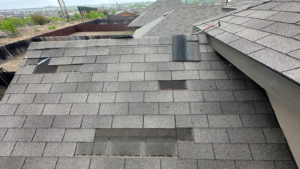
High winds can lift shingles, break seals, and even tear entire sections of roofing away. An insurance adjuster inspecting for wind damage will look for:
Missing or lifted shingles — Shingles that have been peeled back or blown off are obvious red flags. However, the adjuster will also check for subtle lifting along the edges or ridgeline, where shingles are most vulnerable.
Creased or cracked shingles — Wind can flex a shingle back and forth until it creases or cracks. These damaged shingles may still be in place but are no longer functioning properly as a weather barrier.
Compromised seals — Modern shingles have adhesive strips that bond rows together. Wind can break these seals, which is often invisible to the untrained eye but leaves the roof open to future water intrusion.
One word of caution: wind damage patterns can be tricky. Sometimes an insurance adjuster may miss damage in areas that aren’t immediately visible from the roofline. This is one reason having a licensed roofing contractor from SoTex Roofing and Exteriors complete a separate inspection before — or alongside — the adjuster visit is so valuable.
The Role of a Public Adjuster vs. Your Insurance Adjuster
Some homeowners choose to hire a public adjuster — an independent professional who works on behalf of the homeowner, not the insurance company. A public adjuster can be especially useful if you feel the insurance company’s insurance adjuster roof assessment undervalued the damage or missed critical items.
At SoTex Roofing and Exteriors, we frequently partner with public adjusters and can provide detailed inspection reports, photo documentation, and cost estimates that support a more complete claim.
How SoTex Roofing and Exteriors Can Help You Prepare
The best thing a San Antonio homeowner can do before the insurance adjuster arrives is to have a professional roofing contractor inspect the property first. Our team at SoTex Roofing and Exteriors will document every area of damage with photographs, written notes, and measurements. We’ll walk the adjuster through our findings and make sure nothing gets overlooked.
We also understand local building codes and material costs specific to South Texas, which means our estimates reflect what it actually costs to restore your roof to pre-storm condition — not a lowball figure that leaves you paying out of pocket.
Don’t Face the Process Alone
An insurance adjuster roof inspection can feel high-stakes, and rightfully so. The outcome affects whether your home gets properly repaired or whether you’re left covering costs that your policy should handle. At SoTex Roofing and Exteriors, we believe every San Antonio homeowner deserves a fair shot at a full, honest settlement.
After a storm, call us before you call your insurance company. We’ll inspect your roof at no charge, document everything thoroughly, and stand by your side throughout the claims process. We’ve built our reputation in San Antonio on doing things the right way — and we’re ready to put that experience to work for you.