
Winter can be brutal on your home, and your roof takes the hardest hit. Snow buildup, freezing temperatures, and hidden moisture issues can quickly turn into expensive repairs if ignored. Ice dams are one of the most damaging winter roofing problems, often forming without homeowners realizing the risk.
This is why winter roof maintenance is not optional; it’s your first line of defense against leaks, structural damage, and insulation failure. A proactive approach helps protect your roof, extend its lifespan, and keep your home warm and dry throughout the cold months.
Understanding Ice Dams
What Are Ice Dams?
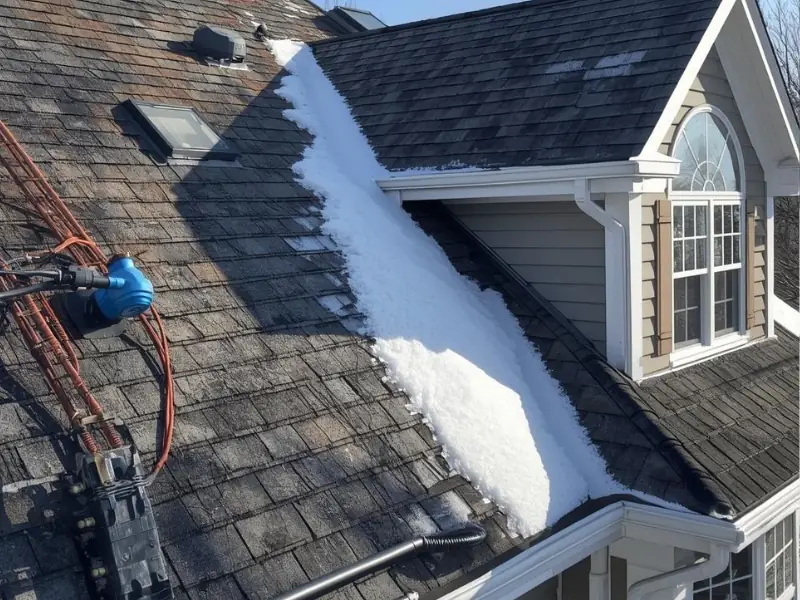
Ice dams form when snow on the roof melts and refreezes at the edges, creating a barrier that traps water behind it. As water backs up, it can seep under shingles and into your home.
The Science Behind Ice Dam Formation
Ice dams occur due to uneven roof temperatures. Heat escaping from the attic melts snow higher up the roof, while colder eaves cause the water to refreeze. Over time, this cycle leads to thick ice buildup.
Common Signs Your Roof Has Ice Dams
-
Icicles hanging along the roof edges
-
Water stains on ceilings or walls
-
Peeling paint near exterior walls
-
Ice buildup in gutters
Left untreated, ice dams can cause serious damage to shingles, gutters, and interior drywall.
The Role of Attic Insulation in Winter Roof Maintenance
Poor attic insulation is one of the biggest contributors to ice dams. When heat escapes through the attic, it raises roof temperatures and accelerates snowmelt.
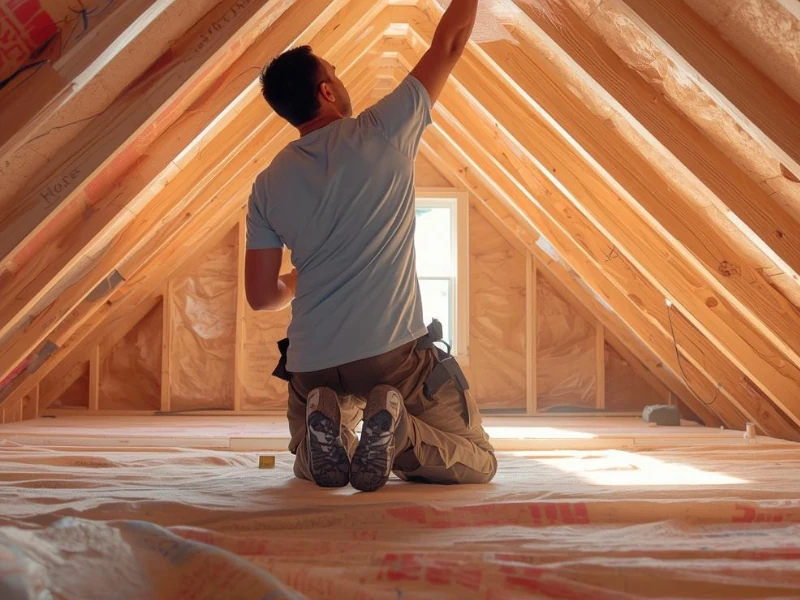
How Heat Loss Causes Ice Dams
Warm air leaking into the attic melts snow from below, starting the freeze-thaw cycle that leads to ice dams. Proper insulation helps keep roof temperatures consistent.
Recommended Insulation Levels
Homes in cold climates typically need higher R-values to reduce heat loss. Checking insulation depth and coverage before winter is a critical step in winter roof maintenance.
Common Insulation Issues
-
Gaps around vents or attic hatches
-
Compressed or aged insulation
-
Uneven coverage across the attic floor
Upgrading attic insulation not only helps prevent ice dams but also improves energy efficiency.
Attic Ventilation for Ice Dam Prevention
Effective attic ventilation works alongside insulation to keep your roof cold and dry during winter.
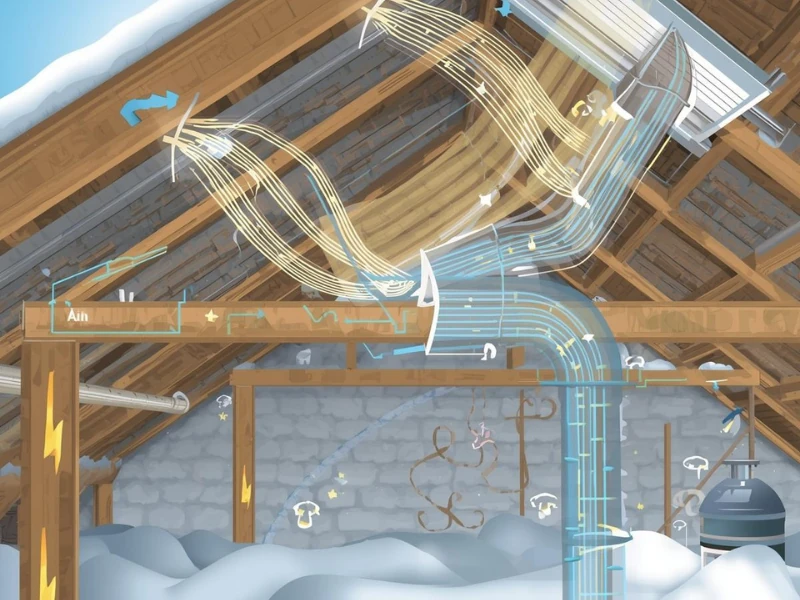
How Ventilation Prevents Ice Dams
Proper airflow removes warm, moist air from the attic, preventing snow from melting unevenly on the roof surface.
Intake vs. Exhaust Vents
Balanced ventilation requires both intake vents (soffits) and exhaust vents (ridge or roof vents). Without this balance, moisture and heat can become trapped.
Is Your Ventilation Adequate?
Signs of poor attic ventilation include frost buildup, mold growth, and persistent ice dam issues. Upgrading ventilation is a smart long-term winter roof maintenance investment.
Immediate Prevention Measures
Even with good insulation and ventilation, short-term actions help reduce winter risks.
Gutter Cleaning Before Winter
Routine gutter cleaning ensures melting snow can drain properly instead of refreezing along the roof edge. Clogged gutters significantly increase ice dam risk.
Additional Preventive Options
-
Installing heat cables in problem areas
-
Using ice melt products safely
-
Avoiding sharp tools that can damage shingles
Emergency ice dam removal should always be handled carefully to avoid roof damage.
Long-Term Winter Roof Maintenance Solutions
For lasting protection, homeowners should consider professional upgrades.
Structural Improvements
-
Ice and water shield underlayment
-
Improved roof edge protection
-
Enhanced attic insulation and ventilation systems
Professional winterization services provide a complete assessment and customized solutions to protect your roof season after season.
Final Thoughts
Ignoring winter roof risks can lead to costly repairs and interior damage. Consistent winter roof maintenance helps prevent ice dams, protects your investment, and ensures peace of mind during harsh weather.
If you’re noticing signs of ice buildup, leaks, or poor attic performance, now is the time to act. Contact a professional roofing specialist today for a winter inspection and customized maintenance plan before small issues turn into major repairs.
Join Our Community
Join our community on Facebook, and don’t forget to subscribe to us on YouTube for new content each week.
FAQs
1. What is winter roof maintenance?
Winter roof maintenance includes inspections, insulation checks, ventilation improvements, and gutter cleaning to prevent ice dams and winter roof damage.
2. How does winter roof maintenance prevent ice dams?
It reduces heat loss, improves attic airflow, and allows snowmelt to drain properly instead of refreezing at roof edges.
3. Why is attic insulation important in winter?
Proper attic insulation keeps roof temperatures consistent, reducing snow melt that causes ice dams and winter leaks.
4. Can clogged gutters cause ice dams?
Yes. Blocked gutters trap melting snow, increasing refreezing at roof edges and raising the risk of ice dams.
5. When should I call a professional for winter roof issues?
Call a professional if you notice leaks, sagging, heavy ice buildup, or repeated ice dam formation during winter.