
24 hour roof repair San Antonio is a service that separates prepared Bexar County homeowners from those who spend anxious nights watching a bucket fill under a leaking ceiling, wondering who to call and whether anyone will actually show up. San Antonio’s storm calendar is relentless. Hail events fire through the metro in the early morning hours, overnight wind storms strip ridge caps before sunrise, and tropical moisture bands push through at any hour of the day or night without scheduling consideration for the homeowners beneath them.
When roof damage happens outside of business hours, the ability to reach a licensed San Antonio contractor who will respond within the same 24-hour window is not a premium luxury. It is the difference between a contained repair and a compounding disaster. This guide covers everything Bexar County homeowners need to know about 24-hour roof repair in San Antonio, how to find it, what to expect, and how to use it correctly.
What is 24 Hour Roof Repair San Antonio? (The Simple Definition)
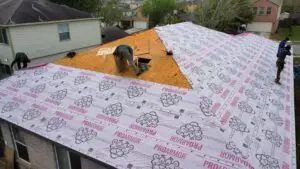
24 hour roof repair San Antonio is a roofing response service offered by licensed contractors who commit to arriving and beginning stabilization work within 24 hours of a service call, regardless of when the damage occurs. The service covers emergency tarping, temporary shingle or panel patching, flashing emergency sealing, debris removal from the roof deck, and any other stabilization work needed to stop active water intrusion and secure the structure until a permanent repair can be completed.
The 24-hour window is the critical differentiator. Standard roofing appointment scheduling in the San Antonio market runs two to four weeks during peak storm season. A 24-hour response contractor bypasses that queue to address active damage before the next rain event converts a manageable repair into a structural remediation project.
24 Hour Roof Repair vs. Standard Repair Scheduling in San Antonio
| Service Type | Response Time | Best Used For | Typical Cost Premium |
|---|---|---|---|
| 24 hour emergency response | Same day to 24 hours | Active leaks, exposed deck, storm damage | 20 to 50 percent above standard |
| Next available appointment | 1 to 3 days | Non-urgent damage with no active leak | Standard pricing |
| Peak storm season scheduling | 2 to 6 weeks | Minor damage, maintenance repairs | Standard pricing |
| Insurance adjuster inspection | 2 to 10 days | Claim assessment after storm event | No cost to homeowner |
| Independent damage assessment | 3 to 7 days | Second opinion, disputed claims | $150 to $300 |
Understanding when 24 hour repair is genuinely necessary versus when standard scheduling is adequate prevents homeowners from paying emergency pricing premiums on work that does not require same-day response.
Why 24 Hour Roof Repair in San Antonio Matters (The Real Cost Breakdown)
What Waiting Until Business Hours Costs
| Overnight Damage Scenario | Cost of Waiting Until Morning | Cost of 24 Hour Response |
|---|---|---|
| Active leak through exposed shingles all night | $2,000 to $6,000 additional interior damage | $300 to $700 emergency tarp |
| Second storm band through the open deck | $4,000 to $12,000 deck and framing damage | $400 to $800 tarp installed before the second event |
| Blown-off panel left unsecured overnight | $1,500 to $8,000 vehicle or property damage | $300 to $600 panel resecurement |
| Saturated insulation has not been mitigated within 24 hours | $3,000 to $10,000 mold remediation | $500 to $1,500 moisture mitigation |
| Structural debris left on the damaged deck overnight | $1,000 to $4,000 additional deck compression | $400 to $900 debris removal and tarping |
Every hour between roof damage and professional stabilization is a measurable additional cost. In San Antonio, where storm systems frequently move through in sequences with secondary cells following the primary event within hours, having a 24-hour contractor in place before the second cell arrives is a financial decision as much as a practical one.
The San Antonio Multiple Storm Sequence Problem
San Antonio’s geographic position in the Texas Hill Country transition zone means that storm systems rarely arrive as single isolated events. A primary hail cell frequently loosens shingles and damages sealant strips across a roof, and a secondary wind event following the same storm complex completes the blow-off that the first cell initiated.
A roof that survived the first event with marginal damage may lose significant coverage in the second event four to six hours later. A 24 hour response contractor who installs emergency tarping between the two events prevents the second event from accessing a deck that is already compromised.
When 24 Hour Roof Repair in San Antonio is Genuinely Necessary
Not every roof situation in San Antonio requires a 24-hour response, and correctly categorizing the urgency level protects homeowners from paying emergency premiums on non-emergency work. Active water entry through the roof into the living space at any hour of the day or night is always a 24-hour priority, regardless of how minor the visible exterior damage appears.
A small gap in flashing or a single missing shingle above a water-vulnerable interior space like a bedroom, kitchen, or living room warrants immediate stabilization. Complete shingle blow-off over any section larger than four to five square feet exposes the underlayment or deck directly to the next rain event and requires emergency tarping within hours rather than days.
In San Antonio, where the average time between significant storm events during spring and early summer can be measured in days rather than weeks, deck exposure for even 12 to 24 hours carries a meaningful risk of compounded damage. Tree or branch impact on the roof deck is always a 24-hour response situation, regardless of the extent of visible damage.
Impact events can damage structural framing members in ways that are not visible from the exterior surface, and a compromised deck under a full tarp is safer than an unprotected impact zone through an overnight rain. Flashing failure during or immediately after a tropical moisture event warrants same-day sealing because the sustained rainfall rates associated with Gulf moisture systems will force water through any gap in the flashing assembly that a standard Texas thunderstorm would not penetrate.
Ridge cap blow-off along a significant portion of the roof peak exposes the highest-stress joint in the entire roofing system to water entry and should be tarped or temporarily sealed within the 24 hour window to prevent water from tracking down the inside of the roof structure along the ridge board.
How to Find a Legitimate 24 Hour Roof Repair Contractor in San Antonio
Finding a qualified 24 hour roof repair San Antonio before a storm occurs is dramatically easier and less stressful than searching during the post-storm window when every homeowner in the metro is making the same call simultaneously.
Step 1: Build your contractor list before storm season begins. In February or March, research and identify two to three licensed San Antonio roofing contractors who explicitly advertise 24-hour emergency response. Confirm their service offering during normal business hours when you can evaluate them without pressure.
Step 2: Verify Texas TDLR licensing before saving any number. Use the Texas Department of Licensing and Regulation online lookup tool to confirm that each contractor on your list holds a current Texas Roofing Contractor registration with no disciplinary history. An unlicensed contractor offering 24-hour service creates liability and claim complications that a licensed local contractor will not.
Step 3: Confirm they carry current general liability and workers’ compensation insurance. Request a certificate of insurance from any contractor you are considering before a storm event. A contractor working on your roof without proper insurance creates personal liability exposure for the homeowner if a worker is injured on the property.
Step 4: Check local reviews specifically for emergency response follow-through. Search for San Antonio-specific reviews that reference overnight or weekend emergency calls. A contractor with strong general reviews but no evidence of actual 24-hour emergency follow-through may not deliver on the promise when called at 2 a.m. after a storm.
Step 5: Save the number in your phone before you need it. Store the contractor’s 24-hour line in your phone contacts, labeled clearly so it is immediately accessible in the post-storm window when stress and time pressure are both at their peak.
Step 6: Confirm the scope of their 24-hour service during your research call. Some San Antonio contractors offer 24-hour phone availability but next-day physical response. Others commit to same-night arrival for active leaks. Understanding exactly what the 24-hour promise means for each contractor you identify allows you to match the right contractor to the right urgency level when damage occurs.
24 Hour Contractor Evaluation Checklist for San Antonio
| Evaluation Criteria | Why It Matters | How to Confirm |
|---|---|---|
| Texas TDLR roofing license | Legal requirement for roof work in Texas | tdlr.texas.gov online lookup |
| General liability insurance | Protects the homeowner from property damage claims | Request a certificate of insurance |
| Workers compensation coverage | Protects the homeowner if a worker is injured on the property | Request a certificate of insurance |
| Local San Antonio physical address | Confirms contractor is not a storm chaser | Google Maps and business registration |
| Documented emergency response reviews | Confirms 24 hour promise is actually delivered | Google and BBB review search |
| Written emergency work authorization | Protects both parties on scope and cost | Request before work begins |
Common 24 Hour Roof Repair Mistakes San Antonio Homeowners Make
Searching for a 24 hour roof repair San Antonio during the storm or immediately after it is the preparation failure that forces San Antonio homeowners into the most vulnerable position in the entire repair process. Every contractor in the metro is receiving calls simultaneously after a major event, and the homeowner who is searching cold from a list of Google results at midnight has no time to verify licenses, check insurance, or read reviews before the pressure to authorize someone creates a decision made on urgency rather than quality.
Building the contractor list before storm season eliminates this problem. Assuming that any contractor who answers a 24-hour line is licensed and insured in Texas is a dangerous shortcut in the San Antonio post-storm market. Out-of-state storm chasers specifically set up temporary local phone numbers and websites following major hail events in San Antonio to capture emergency calls from homeowners who are not verifying credentials in the post-storm chaos.
A two-minute TDLR license check is the single most effective filter available and takes less time than the call itself. Authorizing full permanent repair work from a 24-hour emergency contractor without obtaining competing bids is a pricing decision made under pressure that consistently produces above-market repair costs. Emergency stabilization, whether a tarp, a temporary patch, or a flashing seal, does not obligate the homeowner to use the same contractor for the permanent scope.
Separating these two decisions explicitly protects the homeowner’s ability to bid the permanent work competitively. Failing to document the roof condition with photos before the 24 hour contractor arrives eliminates the most valuable claim documentation available. Pre-repair photos taken by the homeowner from ground level immediately after the storm capture the original damage condition in a way that the contractor’s own documentation cannot replicate without a conflict of interest concern.
Homeowner photos taken before any contractor arrives are the most credible damage documentation in the insurance claim file. Paying the emergency response premium without confirming the cost scope in writing before work begins creates billing disputes that are difficult to resolve after the tarp is installed and the crew has left the property. Any 24 hour roof repair authorization in San Antonio should include a written work order specifying the scope of emergency work and the total cost before the crew begins.
24 Hour Roof Repair in San Antonio Benchmarks by Roof Age
The age of a San Antonio roof shapes both the frequency with which 24 hour emergency response is needed and the complexity of the stabilization work required. Roofs 0 to 5 years old in San Antonio that require 24 hour emergency response are most commonly dealing with storm severity that exceeded installation design thresholds or with installation defects that the storm exposed.
Emergency repair in this age range should be documented carefully as the damage assessment may support a contractor warranty claim alongside the insurance claim. Between 5 and 10 years, sealant strip degradation from San Antonio’s UV and thermal cycling environment begins to make San Antonio roofs meaningfully more susceptible to wind-driven shingle loosening in storm events that a newer roof would resist.
The frequency of 24 hour roof repair San Antonio calls begins to increase at this age range for homeowners who have not maintained sealant strips and flashing through annual inspections. At 10 to 15 years, San Antonio roofs in this range are in the window where cumulative storm history, granule loss, and reduced shingle flexibility combine to produce more extensive damage in a given storm event than a newer roof would sustain.
Emergency response at this age should include a comprehensive damage documentation effort that captures the full roof condition rather than just the most visible impact zone, as cumulative prior storm damage frequently appears alongside the triggering event’s damage. Between 15 and 20 years, 24 hour emergency response for a San Antonio roof in this age range should always include a contractor recommendation on whether the permanent repair scope justifies repair or whether replacement is the more economical path forward.
A roof in this age range that requires emergency tarping after a significant storm has likely sustained damage across a broader area than the tarp is covering. Over the past 20 years, any 24-hour emergency response for a San Antonio roof should be treated explicitly as stabilization pending replacement rather than stabilization pending repair.
The permanent solution for a 20-plus-year roof that sustains significant storm damage in San Antonio is almost universally full replacement, and framing the emergency response correctly from the start prevents the homeowner from investing repair dollars in a system that will require full replacement within the same insurance claim cycle.
Technology Tools San Antonio Homeowners Can Use
Modern tools allow San Antonio homeowners to prepare for, respond to, and manage 24 hour roof repair situations more effectively than has ever been possible. Severe weather alert apps with Bexar County-specific push notifications wake homeowners during overnight storm events so they can begin the interior protection and documentation sequence before the storm has fully passed rather than discovering damage the following morning.
Hail tracking apps with address-specific confirmation allow homeowners to verify whether a qualifying hail event occurred at their property during an overnight storm, establishing the claim date for a filing that can be opened before business hours even begin. Contractor verification tools through the Texas Department of Licensing and Regulation are accessible 24 hours a day from any smartphone, meaning the license check that separates a legitimate San Antonio contractor from a storm chaser can be completed at any hour during the post-storm emergency call process.
Digital insurance claim platforms offered by major Texas insurers allow homeowners to open a storm damage claim, upload photos, and confirm claim numbers entirely through a smartphone app at any hour of the night without waiting for a business hours phone line.
Cloud photo storage apps with automatic date and time stamping, including the native photo apps on both iOS and Android devices, create a verifiable timestamped damage record the moment the homeowner takes post-storm photos, establishing the documentation chain that the insurance claim depends on without any additional equipment or service.
DIY Response vs. 24 Hour Professional Repair: Know the Difference
San Antonio homeowners can and should handle the entire first-response sequence without professional help. Moving furniture and valuables away from active drips, placing buckets and plastic sheeting to manage water entry, taking ground-level photos of exterior damage with date and time stamps, opening the insurance claim through the insurer’s app or 24 hour claims line, and calling a verified licensed contractor to authorize emergency stabilization are all homeowner tasks that require no roofing knowledge and no time on the roof surface.
Every physical task on the roof itself after a storm, including tarp installation, shingle or panel resecurement, temporary flashing sealing, and debris removal from the deck, requires a licensed San Antonio contractor with active fall protection equipment regardless of the hour. A storm-damaged roof surface at any time of day or night is not a safe DIY working environment.
Wet panels, compromised fasteners, and structurally damaged deck sections create fall and collapse risks that professional roofers manage with equipment and training that a homeowner does not have. The 24 hour roof repair San Antonio response premium paid to a licensed contractor for emergency tarping is almost universally recoverable as a mitigation expense through the insurance claim, making the cost argument for DIY roof access after a storm genuinely difficult to justify.
Seek immediate professional attention and do not access the attic or upper floors if a storm impact has caused visible structural deflection in the ceiling, if a tree or large branch has made contact with the roof at any location, or if a confirmed tornado or microburst path crossed within a quarter mile of the property during the storm event. These conditions require a licensed structural assessment before any person enters the spaces below the roof line.
Final Thoughts
24 hour roof repair San Antonio is a service that works best for homeowners who have prepared for it before they need it. The contractor number saved in a phone before storm season, the insurance policy reviewed before the first hail event, and the two-minute TDLR license check completed before any post-storm authorization collectively determine whether a 2 a.m.
Storm roof emergency becomes a managed, documented, fully insured repair or a panicked, undocumented, overpriced scramble. San Antonio storms do not schedule themselves around business hours. The preparation that makes 24-hour roof repair work for you instead of against you takes one afternoon in February and pays for itself the first time a storm arrives at midnight.
FAQs
1. What does 24-hour roof repair in San Antonio actually mean?
A: A licensed contractor commits to arriving and beginning stabilization work within 24 hours of your call, day or night, including weekends and holidays.
2. Is 24-hour roof repair in San Antonio more expensive than standard repair?
A: Yes, typically 20 to 50 percent above standard rates. Emergency tarping costs are usually recoverable as a covered mitigation expense through your homeowners’ insurance.
3. How do I find a legitimate 24-hour roof repair contractor in San Antonio?
A: Verify their Texas TDLR license at tdlr.texas.gov, confirm current insurance, and check local emergency response reviews before saving their number.
4: Should I call the insurance company or the contractor first at 2 a.m.?
A: Call your insurer first to open the claim, then call the contractor. Most insurers have 24-hour claims lines. This sequence protects your claim timeline.
5: Can a 24-hour contractor in San Antonio also do the permanent repair?
A: Yes, but get competing bids first. Emergency stabilization does not obligate you to use the same contractor for permanent repair work.