
Have you ever watched a roofing crew work on one part of a house while another section still has the old shingles in place and wondered why they do not tear everything off at once? Is working section by section slower, or is there actually a reason behind it? For homeowners, understanding roof replacement stages San Antonio crews follow can make the entire process feel less confusing and a lot more reassuring.
Working in Sections Helps Protect Your Home
Once old roofing materials are removed, the roof deck underneath becomes exposed.
That surface is not designed to sit uncovered for long periods, especially if rain is possible.
One of the biggest reasons roof replacement stages San Antonio roofing crews use are completed in sections is to reduce how much of the home is exposed at one time.
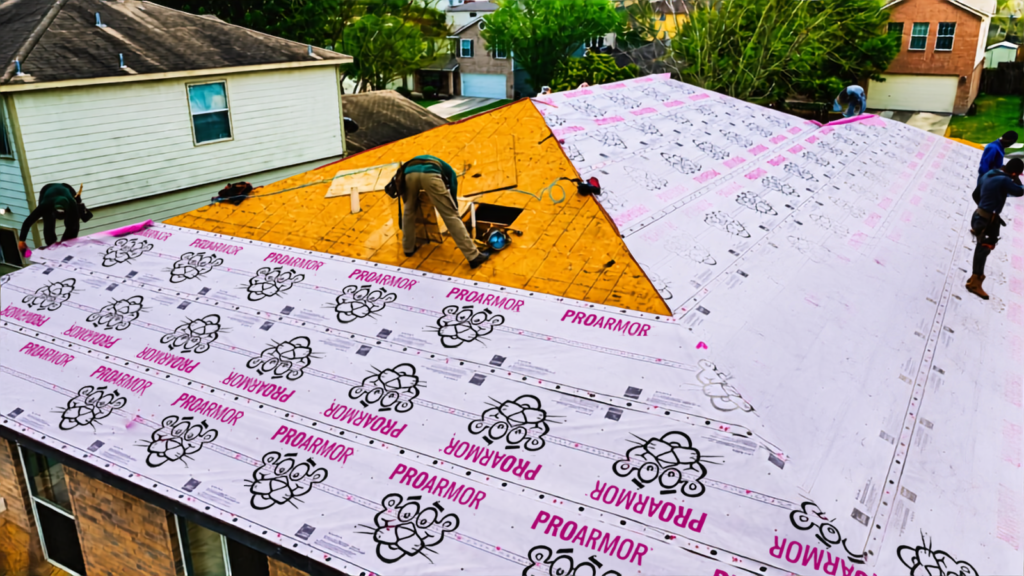
Instead of stripping the entire roof and leaving a large area vulnerable, crews can remove old materials from one section, inspect the decking, install underlayment, and begin rebuilding that area before moving on.
This approach helps reduce risk while keeping the project moving efficiently.
San Antonio Weather Can Change Quickly
Texas weather does not always cooperate with construction schedules.
A clear morning can turn into an afternoon storm, and sudden wind or rain can create problems if too much roofing has been removed at once.
That is why roof replacement stages San Antonio homeowners see often reflect the weather forecast as much as the roof design.
By working in controlled sections, roofers can better manage exposed areas and make sure protective underlayment is installed promptly.
The goal is not simply to finish fast. It is to keep the home protected while the work is happening.
Tear-Off Becomes Easier to Control
Removing an old roof creates a large amount of debris.
Shingles, nails, flashing, underlayment, and other materials all need to come off safely.
Working in sections gives the crew a more organized way to control where debris goes and how it is removed from the property.
During roof replacement stages San Antonio contractors follow, crews can focus tear-off activity in one area rather than creating debris across the entire roof at once.
That helps keep the job site cleaner and makes it easier to protect landscaping, siding, windows, driveways, and other parts of the home below.
An organized tear-off is often a sign of an organized installation.
Roof Decking Can Be Inspected More Carefully
Once a section of old roofing is removed, the wood decking beneath it becomes visible.
This is an important moment because contractors can finally see whether moisture, leaks, age, or previous repairs have damaged the roof structure.
Working section by section gives roofers a chance to inspect each exposed area closely before covering it again.
A professional roof replacement stages San Antonio process should include checking for:
- Soft or rotted decking
- Water stains
- Structural weakness
- Old fastener damage
- Areas that need replacement
Rushing through this stage can allow hidden problems to remain beneath a brand-new roof.
Repairs Can Be Completed Before Moving Forward
If damaged decking is discovered, it should be repaired before new roofing materials go on.
This is another reason section-by-section work makes sense.
Crews can remove the old materials, identify a problem, repair the damaged wood, and continue rebuilding that specific area without opening up unnecessary sections elsewhere.
The roof replacement stages San Antonio homeowners experience should always prioritize the integrity of the structure underneath the shingles.
A beautiful roof surface means very little if it is installed over weak or moisture-damaged decking.
Underlayment Can Go On Sooner
Roof underlayment is one of the most important hidden layers in a roofing system.
It sits between the roof deck and the shingles and provides secondary moisture protection.
When crews work in sections, underlayment can be installed soon after the decking is inspected.
That means roof replacement stages San Antonio projects follow can move from exposed wood to a protected surface more quickly.
Even if the final shingles are not installed immediately, properly placed underlayment helps reduce the amount of time bare decking is exposed to weather.
For San Antonio homeowners, that added protection matters.
Flashing Details Get More Attention
Complex roof areas such as valleys, chimneys, vents, dormers, and roof-to-wall connections require careful flashing work.
These are not areas that should be rushed.
Working in sections allows roofers to slow down around these transitions and make sure flashing, underlayment, and surrounding roofing materials are layered correctly.
A quality roof replacement stages San Antonio process should treat these details as major parts of the job, not small finishing touches.
Many roof leaks begin around flashing, so careful installation here can make a major difference in long-term performance.
Different Roof Sections May Need Different Approaches
Not every part of your roof is exactly the same.
One side may have a steep pitch, another may include valleys, and another may have vents, skylights, or lower-slope sections.
Working in sections allows roofing crews to adapt to each area instead of treating the entire roof as one identical surface.
That flexibility is especially important during roof replacement stages San Antonio homes with more complex designs require.
Each section may need slightly different preparation, flashing, fastening, or water-management details.
The more complicated the roofline, the more valuable an organized approach becomes.
Sectional Work Improves Safety
Roof replacement is demanding physical work.
Crews are carrying materials, removing shingles, handling tools, and moving across sloped surfaces throughout the day.
Keeping the work area organized helps reduce unnecessary hazards.
During roof replacement stages San Antonio contractors use, workers can focus on clearly defined areas rather than navigating across a roof that is completely torn apart.
This also makes it easier to manage ladders, equipment, material placement, and debris removal.
A cleaner job site is generally easier to work on and easier to monitor.
New Shingles Can Be Installed in a Controlled Sequence
Once the deck is repaired, underlayment is installed, and flashing details are prepared, the new roofing material can go on.
Working section by section allows crews to maintain a consistent installation pattern while moving methodically across the roof.
A professional roof replacement stages San Antonio process should include proper starter shingles, alignment, fastening, overlaps, ridge details, and manufacturer-recommended installation practices.
Roofing quality is not just about how fast the shingles go on.
It is about whether every layer underneath them was installed correctly first.
Cleanup Becomes More Manageable
Roofing debris can add up quickly.
Sectional work makes cleanup easier because crews can remove debris as each area is completed rather than waiting until the end of the entire project.
This can help reduce the amount of loose material around the property and make final cleanup more thorough.
Professional roof replacement stages San Antonio homeowners should expect include ongoing debris control, magnetic nail sweeps, and inspection of driveways, lawns, gutters, and landscaping.
A roof replacement should improve the home, not leave the property feeling like a construction zone after the crew leaves.
Working in Sections Is About Quality, Not Delay
Some homeowners assume that moving section by section means the crew is taking longer than necessary.
In reality, this approach is often about control.
It helps roofers protect exposed areas, inspect decking carefully, handle flashing correctly, manage debris, and react to weather conditions more effectively.
At SoTex Roofing and Exteriors, we believe roof replacement stages San Antonio homeowners see should have a clear purpose.
A good roof is built one layer at a time, and each step needs to be completed correctly before the next one begins.
What Should You Ask Before Your Roof Replacement Starts?
Before work begins, ask your roofing contractor how they plan to manage the project.
Will they work in sections? How much of the roof will be exposed at once? What happens if rain moves in? How will landscaping, siding, gutters, and windows be protected?
Understanding roof replacement stages San Antonio contractors follow gives you a better idea of how organized the job will be before the first shingle comes off.
What if the difference between a rushed roof replacement and a well-built one comes down to how carefully each section is handled before the next begins? Schedule a professional roof inspection with SoTex Roofing and Exteriors and learn what a properly planned roof replacement should look like from tear-off to final cleanup.