
Did you look up after the last storm and notice only one or two shingles missing? Did you tell yourself the roof is probably fine because there is no water dripping from the ceiling? That is exactly how small roofing problems can become expensive ones. Missing roof shingles may seem like a minor cosmetic issue, but they can expose the layers underneath to wind, rain, heat, and future storm damage long before a leak becomes obvious inside your home.
Why Missing Shingles Matter More Than You Think
Shingles are installed in overlapping rows to help direct rainwater down the roof and away from vulnerable seams.
When missing roof shingles create a gap in that pattern, the materials underneath may receive more direct exposure than they were designed for.
That does not mean your roof will leak immediately.
Underlayment may still provide temporary protection, and the surrounding shingles may continue shedding most of the water.
The problem is that your roofing system has already lost part of its first line of defense.
One hard San Antonio storm can turn that small opening into a much larger concern.
Wind Is Often the First Suspect
Strong winds are one of the most common reasons shingles disappear.
As roofing materials age, adhesive seals can weaken. Wind may get underneath a shingle edge, lift it repeatedly, crease it, or tear it completely away.
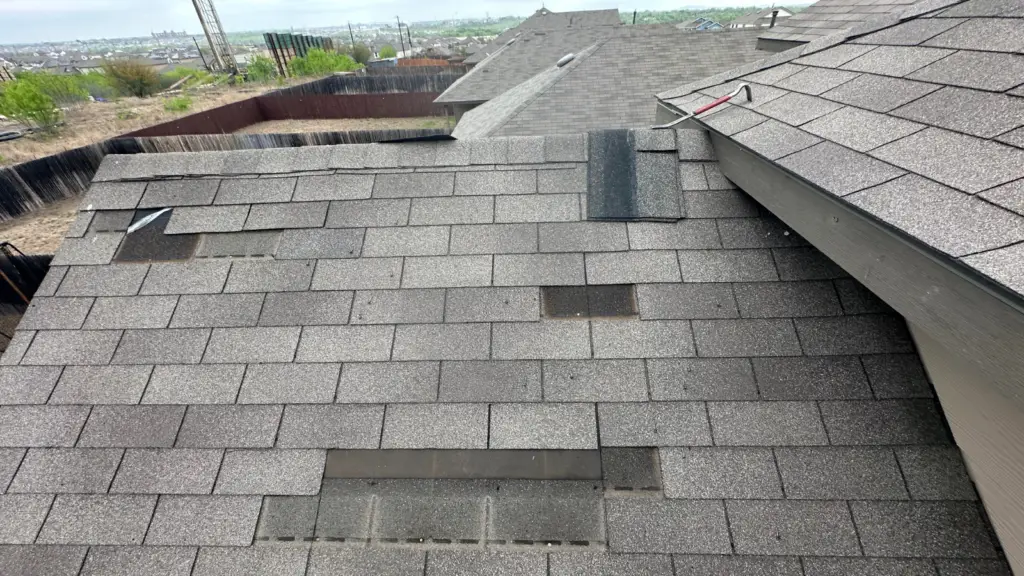
When homeowners notice missing roof shingles after a storm, the visible gap may not be the only damage.
Nearby shingles may have lifted and settled back into place. From the ground, they may look normal even though their seals have been weakened.
That is why a professional roof inspection matters after strong wind events.
A trained roofer can check whether the damage is isolated or part of a larger wind-related problem.
Hail Can Weaken Shingles Before They Blow Off
Hail does not always remove shingles right away.
Instead, it may bruise the asphalt, loosen protective granules, crack the surface, or weaken surrounding materials.
Then another storm arrives.
A shingle that was already damaged by hail may become much easier for wind to lift.
This means missing roof shingles can sometimes be the final symptom of damage that started weeks or months earlier.
San Antonio homeowners should not assume a missing shingle is simply bad luck.
It may be evidence that a section of the roof has already experienced more stress than you realize.
The Underlayment Is Not Meant to Stay Exposed
Beneath the shingles is another protective layer called roof underlayment.
Its job is to help protect the roof deck if moisture gets past the exterior roofing material.
However, underlayment is not meant to replace shingles indefinitely.
When missing roof shingles leave it exposed to direct sunlight, heat, rain, and wind, that backup layer may begin to deteriorate faster.
San Antonio heat can be especially demanding.
UV exposure and high temperatures can weaken materials over time, which means waiting too long can reduce the amount of protection remaining underneath the missing shingle.
Water Can Travel Farther Than You Expect
One of the biggest mistakes homeowners make is waiting for a ceiling leak before taking action.
Water rarely travels straight down.
It can move beneath shingles, follow roof decking, run along rafters, soak insulation, and finally appear far from the original point of entry.
That means missing roof shingles over one part of your home could eventually create interior damage somewhere else.
By the time you notice a brown ceiling stain, moisture may already have been entering for some time.
Catching the problem before that happens is far easier than repairing roofing, insulation, drywall, and interior finishes later.
A Few Missing Shingles May Be Repairable
The good news is that missing shingles do not automatically mean you need a new roof.
If the surrounding materials are still in good condition and the damage is limited to a small area, a professional roof repair may be enough.
A roofer can replace the affected shingles, check the underlayment beneath them, inspect nearby fasteners, and make sure surrounding materials are still secure.
When missing roof shingles are caught early, the repair may be much simpler than homeowners expect.
The key is not assuming that every missing shingle is harmless.
You need to know what caused it and what condition the nearby roofing materials are in.
Repeated Missing Shingles Can Signal a Bigger Problem
If shingles keep blowing off different areas of your roof, the issue may be larger than one bad storm.
Older shingles can become brittle, lose flexibility, and develop weaker seals after years of exposure to heat and sunlight.
At that point, repeated missing roof shingles may be telling you that the roofing system is reaching the end of its useful life.
Continuing to repair one section after another can eventually become more expensive and frustrating than planning a replacement.
A professional inspection can help determine whether repair still makes sense or whether the roof is showing widespread aging.
Watch for Other Warning Signs
If you find shingles in your yard or see gaps on the roof, look for other clues around the property.
You may notice:
- Shingle granules near downspouts
- Lifted or curled shingle edges
- Dented gutters
- Loose flashing
- Roof debris in the yard
- Water stains in the attic
- Musty odors indoors
- Recurring roof repairs
These signs can help indicate whether missing roof shingles are an isolated issue or part of broader storm or age-related damage.
Do not climb onto the roof yourself to check.
Storm-damaged roofing surfaces can be slippery, unstable, and unsafe.
Why San Antonio Weather Makes Waiting Riskier
San Antonio roofs experience intense heat, high winds, hail, heavy rain, and sudden weather changes.
A missing shingle that causes no problem during dry weather may become a leak point during the next thunderstorm.
That is why missing roof shingles should be addressed before severe weather tests the exposed area again.
Preventive repairs are often easier and less expensive than emergency repairs after water reaches the interior.
The sooner the roof is inspected, the more options you may have.
DIY Repairs Can Create New Problems
Replacing a shingle may look simple in an online video, but roof repairs are easy to get wrong.
Improper nail placement, damaged surrounding shingles, incorrect sealant, or poor alignment can create additional leak points.
There is also the obvious safety risk of working on a sloped roof.
A professional San Antonio roofing contractor can inspect the entire area and repair the cause rather than just replacing the visible piece.
That matters because missing roof shingles are often the symptom, not the whole problem.
Do Not Let a Small Gap Make the Decision for You
A missing shingle today does not automatically mean a major roofing emergency.
But ignoring it gives wind, rain, heat, and time a chance to make the decision for you.
If you have noticed missing roof shingles, especially after hail or strong winds, a professional inspection can determine whether you need a simple repair or whether something larger is happening across the roof.
The question is not just whether your roof is leaking right now.
The better question is whether the exposed area will still protect your home during the next heavy San Antonio storm.
What if the one missing shingle you can see is only the first sign of damage you cannot? Schedule a professional roof inspection with SoTex Roofing and Exteriors and find out what your roof needs before the next storm turns a small problem into a much bigger one.