
Is your commercial roof technically still functioning, but starting to show its age? Are recurring repairs, rising cooling costs, ponding water, or worn roofing materials making you wonder whether a full tear-off is your only option? For many older properties, the answer may be more flexible. Retrofitting can allow building owners to improve an existing roofing system with newer materials and technology while addressing the weak points that years of Texas heat and storms have exposed. For anyone evaluating commercial roofing San Antonio TX, understanding retrofit options can open the door to better performance without automatically assuming the entire roof must be rebuilt from scratch.
What Does Retrofitting a Commercial Roof Mean?
A commercial roof retrofit involves upgrading an existing roofing system rather than automatically removing every component and starting over.
Depending on the roof’s condition, this may involve adding new membrane materials, insulation, cover boards, flashing, coatings, drainage improvements, or other protective components.
The goal of commercial roofing San Antonio TX retrofit work is not to hide an aging roof.
It is to identify which parts remain serviceable, correct existing weaknesses, and build a new protective system over an appropriate foundation.
Before any retrofit begins, the existing roof should be inspected carefully. Moisture, saturated insulation, damaged decking, or structural problems may need to be corrected first.
Why Older San Antonio Roofs Need Special Attention
Commercial roofs in San Antonio face relentless exposure.
Extreme heat, ultraviolet radiation, heavy thunderstorms, hail, wind, and rapid temperature changes can gradually weaken roofing materials.
Older systems may become brittle, develop cracks, lose adhesion, or experience repeated flashing failures.
That is why commercial roofing San Antonio TX projects should consider more than the visible surface.
A roof can look reasonably intact while moisture is already trapped underneath.
Before adding modern materials, contractors need to understand the condition of the existing membrane, insulation, deck, penetrations, and drainage system.
A retrofit is only as reliable as the roof underneath it.
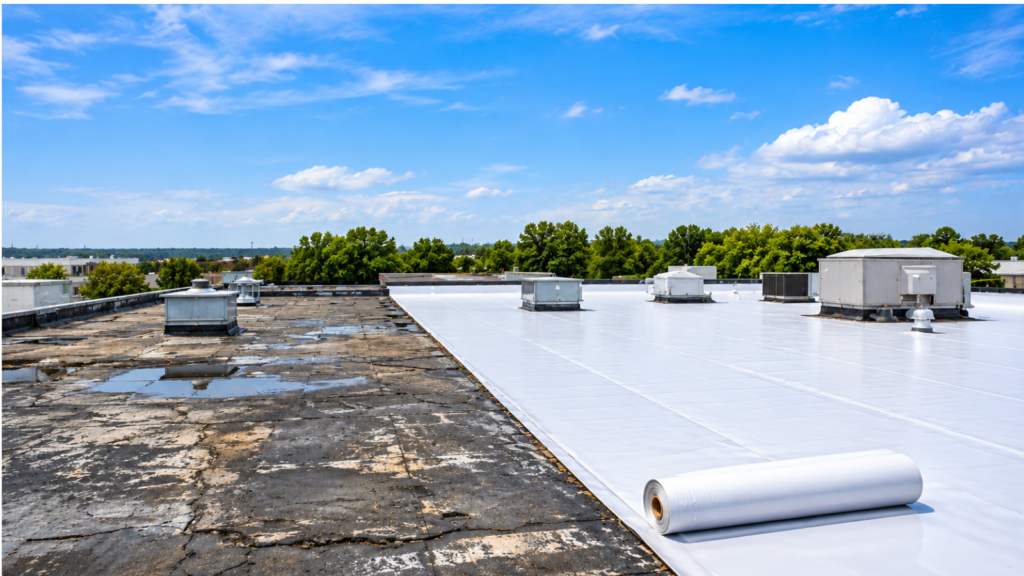
Modern Single-Ply Membranes Can Transform Performance
One of the biggest changes in commercial roofing has been the widespread use of modern single-ply membranes.
Materials such as TPO and other commercial membrane systems can provide durable, flexible protection across large roof surfaces.
Depending on the building and roofing assembly, these materials may offer strong resistance to UV exposure, moisture, and everyday weathering.
For commercial roofing San Antonio TX, reflective roofing options can be particularly attractive because roof surfaces spend so much time under intense Texas sunlight.
A lighter or reflective roofing surface can reduce the amount of solar heat absorbed by the roof compared with some darker materials.
That can become part of a broader energy-efficiency strategy alongside insulation and HVAC improvements.
Better Insulation Can Be Part of the Retrofit
Many older buildings were constructed when insulation expectations were different.
If a roof is being upgraded, it may be an opportunity to evaluate the insulation already in the system.
Adding or improving commercial roof insulation can help reduce heat transfer into the building and support more stable indoor temperatures.
For San Antonio properties, this matters during long periods of extreme summer heat.
Commercial roofing San Antonio TX retrofits that combine modern roofing membranes with properly designed insulation may help improve overall building performance.
The right insulation strategy depends on the existing assembly, roof height, drainage design, and other building-specific factors.
This is why every retrofit should begin with a professional assessment rather than a one-size-fits-all recommendation.
Cover Boards Add Another Layer of Protection
A cover board is installed between the insulation and the roofing membrane in many modern commercial roofing systems.
It creates a more stable surface for the membrane and can add protection against impact, foot traffic, and other stresses depending on the product used.
On buildings where maintenance crews frequently access rooftop HVAC units, this additional durability can be valuable.
For commercial roofing San Antonio TX, where hail and rooftop service activity can both create wear, the right cover board may strengthen the overall roofing assembly.
Small details beneath the visible membrane can have a major impact on how the roof performs over time.
Drainage Problems Should Be Corrected, Not Covered
Does water remain on your commercial roof long after a storm has passed?
Ponding water should never be ignored during a retrofit.
Commercial roofs are often low-slope systems, which means drainage depends heavily on proper roof design, drains, scuppers, gutters, and tapered insulation.
Simply installing a new membrane over an existing drainage problem may leave the underlying issue unresolved.
Professional commercial roofing San Antonio TX work should evaluate where water collects and why.
In some cases, tapered insulation or drainage modifications can help redirect water toward the appropriate outlets.
A modern roofing material performs best when water is allowed to leave the roof efficiently.
Flashing and Penetrations Need Modern Attention Too
Commercial roofs are rarely uninterrupted surfaces.
HVAC equipment, vents, pipes, drains, skylights, curbs, and other penetrations create areas where careful waterproofing is essential.
Many older roofs develop leaks around these transitions before the main roof field fails.
A commercial roofing San Antonio TX retrofit should include close evaluation of flashing details around every penetration.
Modern materials may allow contractors to rebuild these transitions more effectively instead of continuing to patch failing seams.
If a roof has experienced recurring leaks around the same rooftop equipment, this is one area that deserves particular attention.
Roof Coatings May Be an Option in Some Situations
Not every aging commercial roof requires a completely new membrane system.
When the existing roof is structurally sound and compatible, certain roof coating systems may provide another retrofit option.
Coatings can help create a renewed protective surface and may improve reflectivity depending on the product.
However, they should not be treated as a quick fix for wet insulation, failed decking, or significant structural deterioration.
For commercial roofing San Antonio TX, the right solution depends on what is happening beneath the visible roof.
A professional inspection can determine whether a coating, membrane retrofit, repair program, or full replacement makes the most sense.
Retrofitting Can Reduce Disruption
A full roof tear-off can be a major construction project.
Depending on the building, operations may continue below while roofing work happens overhead.
One potential advantage of a retrofit is that it may reduce the amount of existing material that needs to be removed when conditions and applicable requirements allow.
That can mean less tear-off debris and potentially less disruption compared with rebuilding the entire roofing system.
Commercial roofing San Antonio TX projects still require careful planning, especially around entrances, parking areas, rooftop equipment, and daily business operations.
The best retrofit strategy considers not just the roof but how the building is used.
Modern Materials Still Depend on Proper Installation
A premium membrane cannot compensate for poor workmanship.
Seams, flashing, fasteners, adhesives, insulation, drains, and penetrations all need to be installed correctly.
That is why choosing an experienced commercial roofing contractor matters.
At SoTex Roofing and Exteriors, we approach commercial roofing San Antonio TX as a complete system.
The visible material is only one part of the roof. The quality of the substrate, insulation, drainage, flashing, and installation details all determine how well the finished system performs.
Cutting corners in hidden areas can undermine the investment in modern materials.
Is Your Older Commercial Roof Ready for an Upgrade?
An aging roof does not always mean you must wait for leaks to become severe before taking action.
In fact, planning ahead often gives building owners more options.
If repairs are becoming more frequent, energy performance is a concern, water is collecting after storms, or the roofing system is simply reaching an advanced age, a retrofit evaluation can help clarify the next step.
Commercial roofing San Antonio TX should never be about covering problems and hoping they disappear. It should be about understanding the roof you have and determining the smartest way to move it forward.
What if the aging roof over your property does not need another temporary patch, but it also does not need to be completely torn apart? Schedule a professional commercial roof inspection with SoTex Roofing and Exteriors and find out whether modern materials could give your existing roofing system a stronger second life.